English

A post for parents who are planning to do summer activities with their child.
If you must choose one thing to focus on, I would recommend retelling.
The ability to retell, that is, to convey the content close to the text, is very important and in demand in everyday life. In school practice, retelling is both a special exercise that teaches to understand the text, develops memory and speech, and a form of control: retelling shows how much the text is understood, how the child has oral speech. The retelling can be detailed, condensed, selective, and a condensed retelling (condensed narrative) is a form of written examination at the USE.
Algorithm of preparing a detailed retelling:
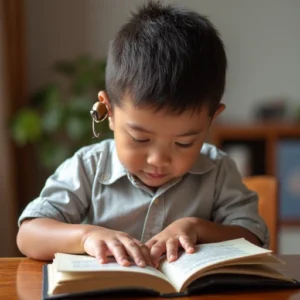
1. The child reads the text or passage first to himself/herself and then answers questions about the content of the text, which he/she is asked for by an adult. You must make sure that the child understands the text, otherwise he/she will not be able to retell it. Of course, adults will also have to read and understand the text to formulate questions.
2. If the text is divided into paragraphs, determine how many paragraphs there are in it, i.e. how many semantic parts will be in our retelling. If the text is small and there are no paragraphs, we try to divide it into meaningful parts.
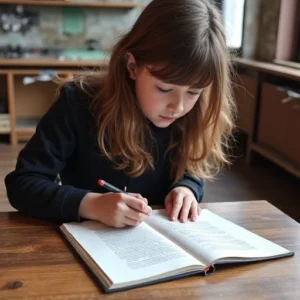
3. Together with the child, determine what the first part of the text is about and title it. Find and underline (highlight) key words in this part of the text, i.e. words that convey the main information, with their help it is easier to reproduce the content.
4. Proceed in the same way when reading the 2nd part, etc. As a result, we have an outline of the text (it is necessary to write it down) and groups of key words of each part (it is better to write them down too). This is a visual support for retelling.
5. The child retells Part 1, relying on the first point of the plan and key words. Then it is very useful to open the text again, reread the first part and check yourself.
6. In the same way, take turns retelling the rest of the parts and self-check the text.
7. Once again read the whole text (a child or an adult can read aloud). 8. The child retells the whole text with reference to the plan and key words.
8. The child retells the whole text with reference to the plan and key words.