English

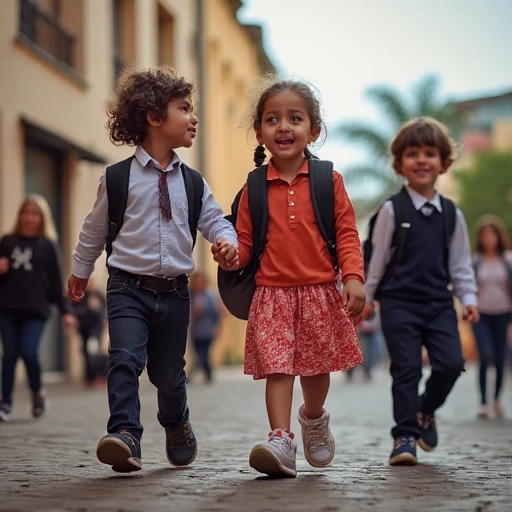
Friendship in childhood is not only a fun pastime, but also an important stage of social development. Through communication with peers, the child learns to trust, co-operate, solve conflicts and understand the emotions of others. But not all children find it easy to make friends. How to help your child build strong and healthy relationships?
1. Developing communication skills
The ability to communicate is the foundation of friendship. If a child is shy or doesn’t know how to start a conversation, it will be difficult for them to make friends.
How to help?
– Teach your child simple introductions: ‘Hi, what’s your name?’, ‘Let’s play together!’.
– Develop dialogue speech: ask questions, teach to listen to the interlocutor.
– Play role-playing games (‘How to get acquainted?’, ‘How to suggest a game?’).
2. Creating a comfortable environment for socialising
Children find friends more easily in a familiar and safe environment.
Where is it possible to make friends?
– Kindergarten/school – regular group socialising.
– Yard games – joint walks with neighbourhood children.
– Clubs and sections – common interests bring you closer together.
– Children’s holidays – informal atmosphere helps to loosen up.
3. Developing emotional intelligence
Friendship requires the ability to understand one’s own and others’ emotions.
How to teach this?
– Discuss the feelings of characters from books and cartoons.
– Talk to your child about his or her feelings: ‘Are you upset because…?’
– Teach apologising, thanking, sharing – this strengthens friendship.
4. Support, not pressure
Some parents intervene too much, which can cause stress for the child.
What is the right way to help?
– Don’t force friendships by force.
– Don’t criticise for failures (‘Why are you alone and everyone else is playing?’).
– Praise for attempts to communicate, even if they are tentative.
5. Personal example
Children copy the behaviour of adults. If the family is friendly, the child adopts this model.
What can be done?
– Show how you socialise with friends.
– Invite families with children to visit.
– Tell stories from your childhood about friendship.
6. Resolving Conflicts
Quarrels between children are inevitable, but it is important to teach your child to reconcile and negotiate.
How to help?
– Explain that conflicts are normal.
– Teach them to say, ‘Let’s make up’, ‘I didn’t mean to hurt you’.
– Don’t decide everything for your child, give him/her a chance to find a way out.
7. If a child is shy
Not all children are naturally sociable, but that doesn’t mean they won’t have friends.
How to be supportive?
– Don’t call him ‘shy’ in front of others.
– Start small: one-on-one communication is more comfortable than in a large group.
– Praise for small steps: ‘You came up to the children by yourself today – that’s great!’
Conclusion
Friendship in childhood is the training of social skills that will be useful in adulthood. The task of parents is not to choose friends for the child, but to create conditions in which he can learn to build relationships himself. The main thing is to be close, supportive and believe that your child will definitely have real friends!